Case Study | Trichy Web Development
Industry: Jewellery
Location: Trichy, Tamil Nadu
Primary Service: CRM Software
Project Duration: 7 Months
Measurement Period: Before and After CRM Implementation
Note: The performance figures below are publication-ready draft figures and should be replaced with verified client data before publishing.
Summary
A Trichy jewellery business was receiving customer enquiries through multiple channels but lacked a centralised system for managing customer information and follow-ups.
Sales staff had difficulty tracking enquiry status, remembering follow-up requirements, and accessing previous customer interactions.
Trichy Web Development implemented a CRM software solution to centralise customer records, organise enquiries, and create a structured follow-up workflow.
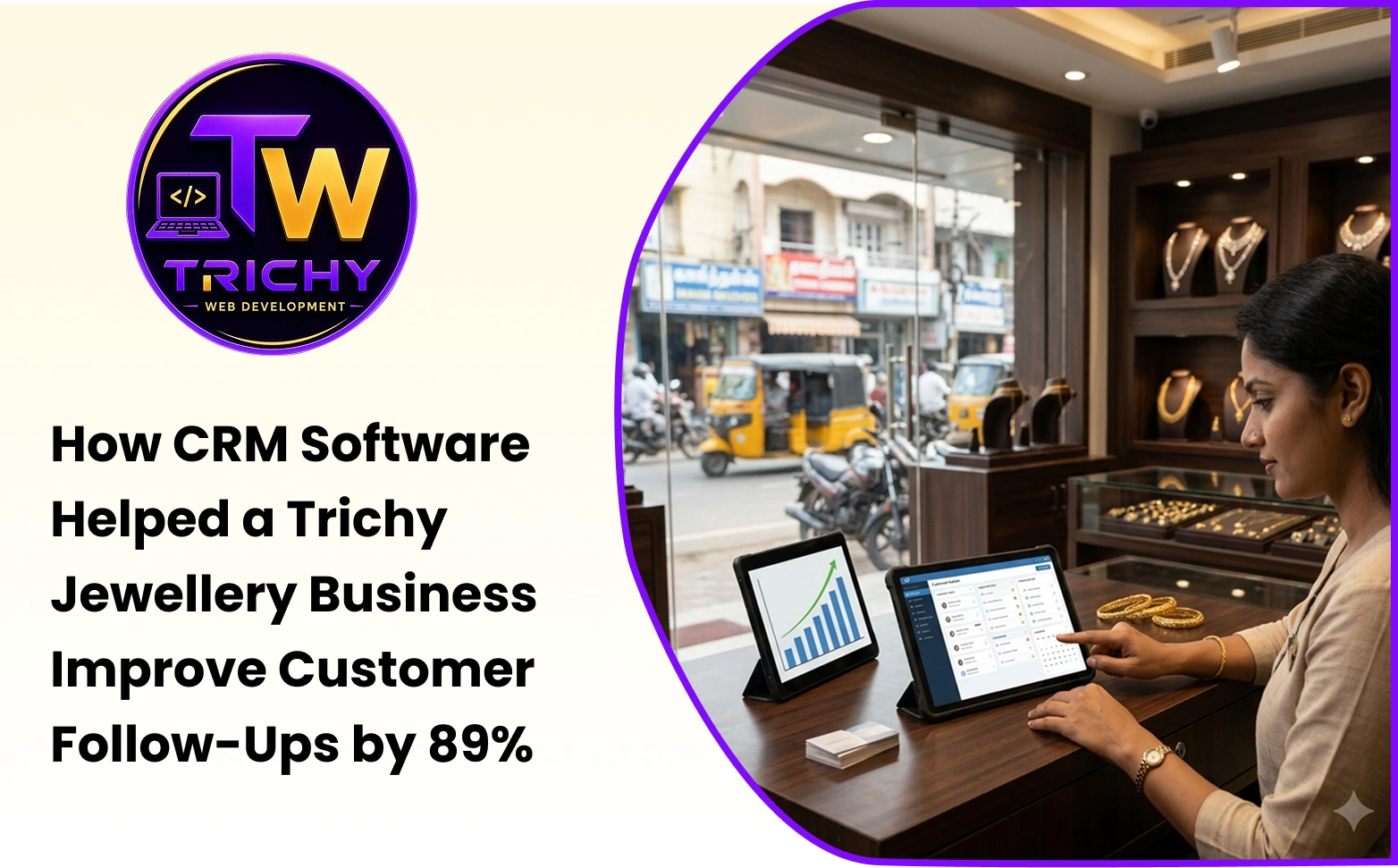
The new CRM system improved customer follow-up efficiency by 89%.
Project Snapshot
Industry: Jewellery
Location: Trichy, Tamil Nadu
Project Duration: 7 Months
Primary Service: CRM Software
Key Focus: Customer Records, Enquiry Tracking, Follow-Ups, Sales Visibility
Client Background
The client was an established jewellery business serving customers with different purchasing requirements and occasions.
Customer relationships were an important part of its sales process, but information was distributed across multiple channels and manual records.
The Challenge
• Customer records were stored in different locations
• Follow-ups were difficult to track
• Previous interactions were not easily accessible
• Enquiry status was unclear
• Sales staff maintained separate notes
• Missed follow-ups affected opportunities
• Management had limited pipeline visibility
Initial Business Analysis by Trichy Web Development
The business analysis showed that the key issue was customer information management rather than simply enquiry volume.
The business needed a single source of customer information where staff could review enquiry history, track follow-up activities, and understand the current stage of each opportunity.
Solution Implemented by Trichy Web Development
The CRM system included:
• Centralised customer profiles
• Enquiry management
• Follow-up tracking
• Interaction history
• Sales pipeline management
• Customer status categories
• Reminder functionality
• Staff access controls
• Sales reporting
Core Strategic Pillars
-
Customer Data Centralisation
Customer information was consolidated into a structured system.
-
Follow-Up Management
Sales teams could identify pending actions more easily.
-
Sales Pipeline Visibility
Management gained a clearer understanding of enquiry progress.
-
Customer History
Previous interactions could be reviewed before continuing customer conversations.
Implementation Process
Phase 1: Sales Process Analysis
The existing customer enquiry and follow-up processes were documented.
Phase 2: CRM Planning
Customer fields, enquiry stages, user roles, and workflows were defined.
Phase 3: CRM Development
The required CRM functionality was developed.
Phase 4: Data Configuration
Existing customer information was structured for the new system.
Phase 5: Testing and Deployment
Sales workflows, permissions, reminders, and reporting were tested before deployment.
Results Achieved
• 89% improvement in customer follow-up efficiency
• 76% reduction in missed follow-up actions
• 93% improvement in customer information accessibility
• 71% increase in sales pipeline visibility
• 62% reduction in time spent locating customer records
Key Success Factors
• Centralised customer database
• Structured follow-up process
• Clear sales stages
• Customer history visibility
• Practical reporting functionality
Future Growth Opportunities
The CRM can be expanded with customer segmentation, loyalty management, appointment tracking, sales forecasting, and integration with additional business systems.
Expert Recommendations from Trichy Web Development
Jewellery businesses depend heavily on customer trust and relationship management.
A CRM should therefore help staff understand customer history and maintain consistent follow-up rather than functioning as a simple contact database.
Conclusion
The CRM Software implementation gave the jewellery business a more organised way to manage customer relationships and sales opportunities.
Centralised information and structured follow-up processes helped the team manage customer interactions more consistently.
Want Better Customer Relationship Management?
Build a CRM system that keeps customer information, enquiries, interactions, and follow-ups organised in one place.